
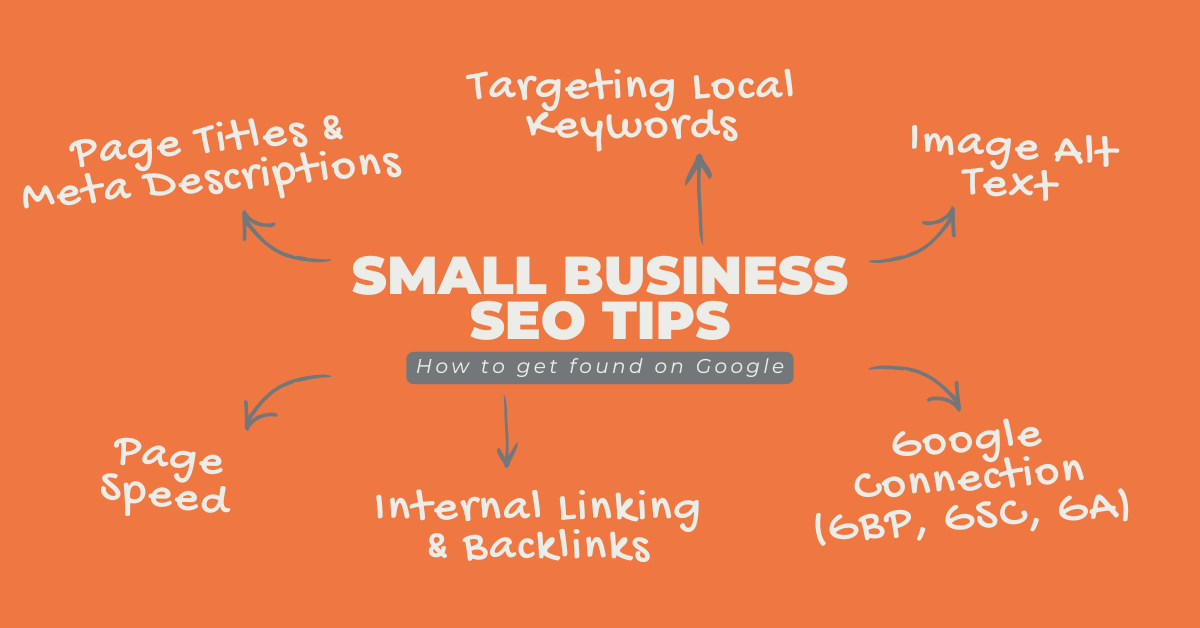


Most small business owners have heard of SEO. Most of them have also been told it is complicated, expensive, and something best left to the experts. Neither of those things is true. The fundamentals of SEO are genuinely learnable, most of the most impactful actions are completely free, and the small businesses that show up consistently on page one of Google are not there because they have a bigger budget. They are there because someone took the time to get the basics right. These small business SEO tips will show you exactly how to do the same.
This post is the first in a dedicated SEO Tips series and your complete guide to small business SEO tips that actually move the needle. We will cover what SEO actually is, the on-page basics every small business website needs, how local SEO works and why it is one of the most powerful tools available to a small business, and how to set up and optimize your Google Business Profile to show up in local search results. If you are working through the Small Business Website Checklist: 9 Things Your Site Needs to Get Clients, point nine covers basic SEO foundations, and this post expands on that in full detail.
What Is SEO and Why Does It Matter for Small Businesses?
SEO stands for search engine optimization. In plain language, it is the practice of making your website easier for Google to find, understand, and recommend to people who are searching for what you offer. When someone types a question or a service into Google, the results that appear on page one are not there by accident. They are there because Google has determined that those pages are the most relevant, trustworthy, and useful responses to that search. SEO is how you signal to Google that your page deserves to be one of those results.
For small businesses, SEO is one of the most cost-effective marketing strategies available because it targets people who are already actively looking for what you offer. Unlike social media, where you are interrupting someone’s scroll, a person finding your website through a Google search has already decided they want what you have. They typed it in themselves. That intent makes organic search traffic some of the most valuable traffic your website can receive, and it compounds over time in a way that paid advertising never does.
Putting these small business SEO tips into practice does not require a technical background or a large budget. It requires consistency, a basic understanding of how Google thinks, and the willingness to implement a handful of foundational practices across your website. The rest of this post covers exactly what those practices are.
How to Choose the Right Keywords for Your Small Business Website
One of the most important small business SEO tips anyone can give you is this: before you can optimize a single page on your website, you need to understand keywords. A keyword is simply the word or phrase a person types into Google when they are looking for something. When someone searches “web designer in Waterloo” or “how to write a homepage headline,” those search terms are keywords. Your job is to figure out which keywords your ideal clients are using and then make sure those words appear naturally throughout your website so Google connects your pages to those searches.
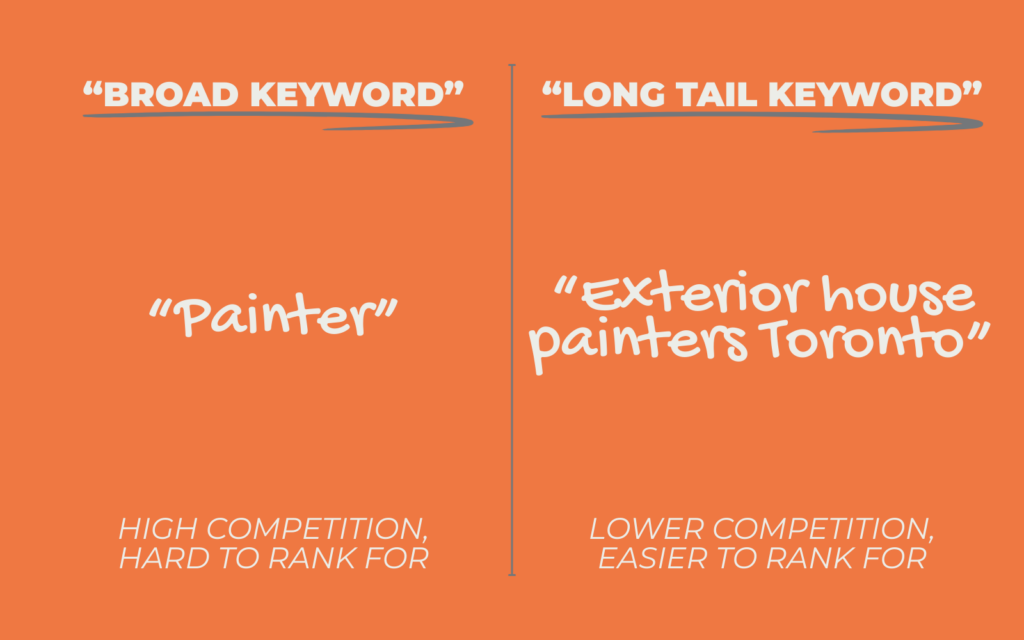
The most important distinction for a small business owner to understand is the difference between broad keywords and long-tail keywords. A broad keyword is short and general, something like “painter” or “photographer.” These keywords have enormous search volume but also enormous competition. Trying to rank for “painter” as a newer website means competing against thousands of established businesses with years of authority behind them. You will not win that battle quickly, and the traffic those broad terms send is often not well targeted anyway.
A long tail keyword is longer, more specific, and more conversational. Something like “exterior house painters Toronto” or “wedding photographer for small weddings.” These keywords have lower search volume but two significant advantages. First, the competition is far more manageable for a newer website. Second, the people searching those specific phrases are much further along in their decision-making and much more likely to become actual clients.
How to Find the Right Keywords for Your Business
One of the most practical small business SEO tips for finding the right keywords is to start by thinking like your ideal client. What would they type into Google when they are looking for exactly what you offer? Write down every phrase you can think of, then use a free or affordable keyword research tool like Google Search Console, Ubersuggest, or Mangools to check the search volume and difficulty of each one. You are looking for keywords with enough monthly searches to be worth targeting and a difficulty score low enough that a newer website can realistically compete for them. I recommend targeting keywords with a low-to-medium search volume (50-1,000 monthly searches) and a keyword difficulty under 30.
Use One Primary Keyword Per Page
Every page on your website and every blog post you write should have one primary keyword that it is built around. That keyword should appear in your page title, your page description, your main heading, your first paragraph, your image text, your URL slug, and naturally throughout the body of the page. Having one clear primary keyword gives Google an unambiguous signal about what the page is most relevant for and what search it should rank for above everything else.
Secondary Keywords Support Your Primary Keyword
Alongside your primary keyword, you can naturally weave in related secondary keywords and phrases that reinforce the topic of the page. These are words and phrases that are closely related to your main keyword and that your ideal reader would naturally expect to find in a post about that topic. Secondary keywords should appear where they fit naturally and never at the expense of readability.
Small Business SEO Tips: The On-Page Basics Every Website Needs
On-page SEO refers to everything you can control directly on your own website. It is the foundation on which everything else is built, and it is where most small business websites have the most room for immediate improvement. Getting these basics right is how to improve website SEO without hiring an agency or spending a single dollar.
Page Titles and Meta Descriptions
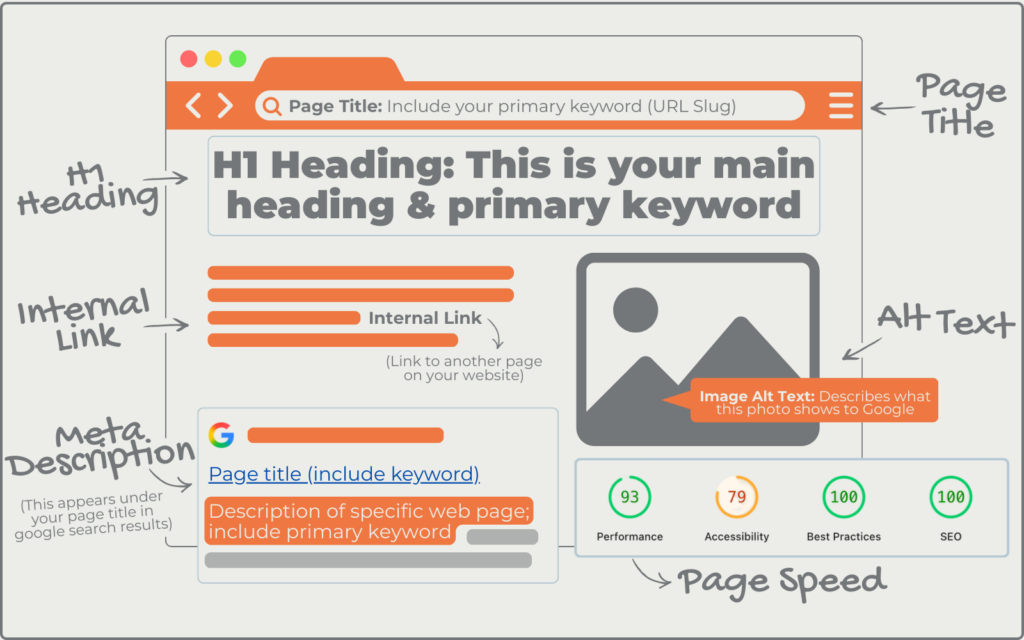
Every page on your website has a title tag and a meta description. The title tag is what appears as the clickable blue link in Google search results. The meta description is the short paragraph of text beneath it. Both should be unique for every page, include your primary keyword naturally, and clearly describe what the page is about. Most website platforms let you edit these directly without any technical knowledge. If your page titles currently say your business name or “Home” and “About,” you are missing one of the most basic and most impactful on-page SEO signals available to you.
Headings and Content Structure
Google reads your page content the same way a reader does, starting at the top and working down. Using clear heading tags throughout your content, with the most important keyword in your main H1 heading and supporting keywords in your H2 and H3 subheadings, tells Google exactly what your page is about and which searches it should appear for. Well-structured content also keeps visitors on your page longer because it is easier to read and navigate, which is itself a positive signal to Google.
Image Alt Text
Every image on your website has an alt text field where you can add a short written description of what the image shows. Google cannot see images the way a human can, so it relies on alt text to understand what is in each photo. Filling in accurate, descriptive alt text for every image on your site is a simple five-minute task that most small business websites skip entirely, and it contributes meaningfully to how well your pages rank for relevant searches.
Page Speed
Google explicitly rewards fast-loading websites and penalizes slow ones. A page that takes more than three seconds to load loses a significant portion of its visitors before they even see your content, and that high exit rate signals to Google that your page is not delivering a good experience. The most common cause of slow page speed on small business websites is large, uncompressed image files. Compressing every image before uploading it to your website using a free tool like Compressor.io or TinyPNG is one of the single highest impact things you can do to improve your Google search ranking quickly and without any technical expertise. Check out your website speed on Google’s PageSpeed Insights Website.
Internal Linking
Linking between your own pages and blog posts tells Google which content on your site is most important and how different pieces of content relate to each other. Every blog post you write should link back to at least two other relevant posts or pages on your site. This keeps visitors on your website longer, helps Google crawl and understand your content more thoroughly, and gradually builds the topical authority that moves your pages up in search rankings over time.
How to Get Found on Google With Local SEO for Small Businesses
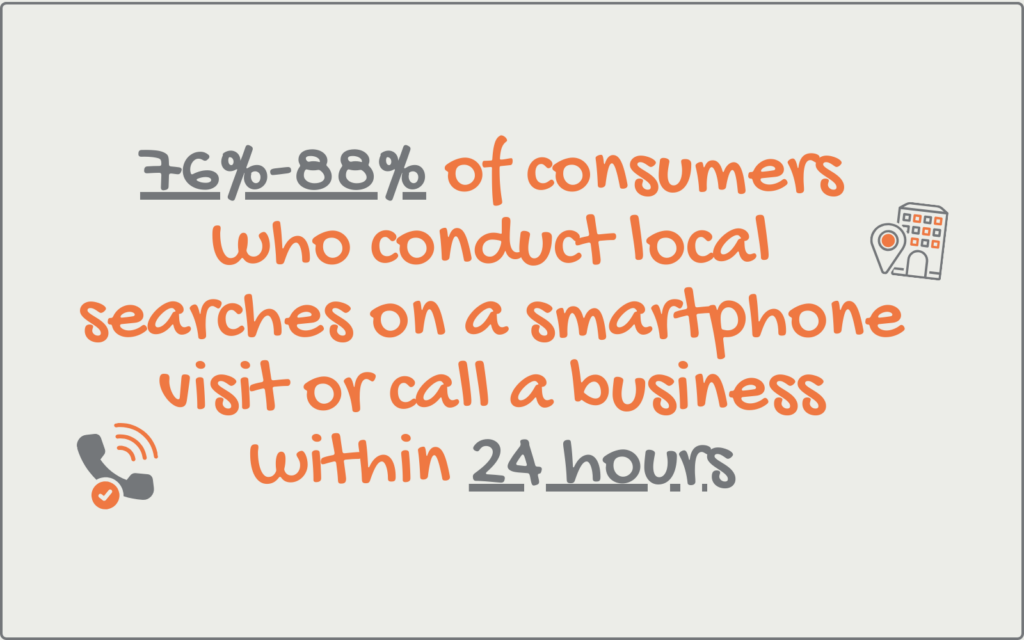
On-page SEO gets your website in order. Local search engine optimization gets your website in front of the specific people in your area who are searching for exactly what you offer. For most small businesses, local SEO is where the highest value search traffic comes from because local searches carry the strongest buying intent of any search type.
When someone searches “web designer in Waterloo,” or “best cafe near me,” or “family photographer Toronto,” they are not browsing casually. They are actively seeking a specific service in a specific location and are ready to make a decision. Showing up for those searches puts your business in front of people at the exact moment they are most likely to become a client.
Use Your Location Naturally Throughout Your Website
Your city, region, and service area should appear naturally in your homepage headline, page copy, about page, and service descriptions. Not stuffed awkwardly into every sentence, but present enough that Google clearly understands where you are based and who you serve geographically. A web designer whose website never mentions their city is invisible to anyone searching for a web designer in that city, no matter how beautiful the site is.
Create Location Specific Service Pages
If you serve multiple cities or regions, consider creating a dedicated page for each service area rather than trying to rank a single generic services page for every location simultaneously. A dedicated page for each location gives Google a clear, specific signal about your geographic reach. It significantly improves your chances of appearing in local searches across all the areas you serve.
Get Listed in Local Directories
Your business name, address, and phone number appearing consistently across local directories like Yelp, Yellow Pages, and industry-specific listings reinforces your local presence in Google’s eyes. These are called citations, and consistency is the keyword. Your business name and contact details should be identical across every directory listing. Even small discrepancies like an abbreviated street name on one listing and a spelled-out version on another can dilute the local SEO signal you are trying to build.
Earn Local Backlinks
A backlink is a link from another website pointing to yours. When that website is based in your local area or serves your local community, it carries additional weight as a local SEO signal. Local press features, partnerships with complementary businesses, sponsorships of community events, and guest posts on local blogs are all genuine ways to earn local backlinks that strengthen your position in local search results over time.
Encourage and Respond to Google Reviews
The number and quality of your Google reviews is one of the strongest local ranking signals available to a small business. Businesses with more positive reviews consistently outrank businesses with fewer reviews, all other things being equal. Ask every satisfied client to leave a Google review and respond to every review you receive, positive or negative. That engagement signals to Google that your business is active, responsive, and worth recommending.
Google Business Profile: What It Is and How to Optimize It for Local Search
If local SEO is the strategy, your Google Business Profile is one of its most powerful tools. Understanding what a Google Business Profile (GBP) is and how to use it correctly is one of the most impactful things any small business owner can do to improve their local visibility, and it costs absolutely nothing.
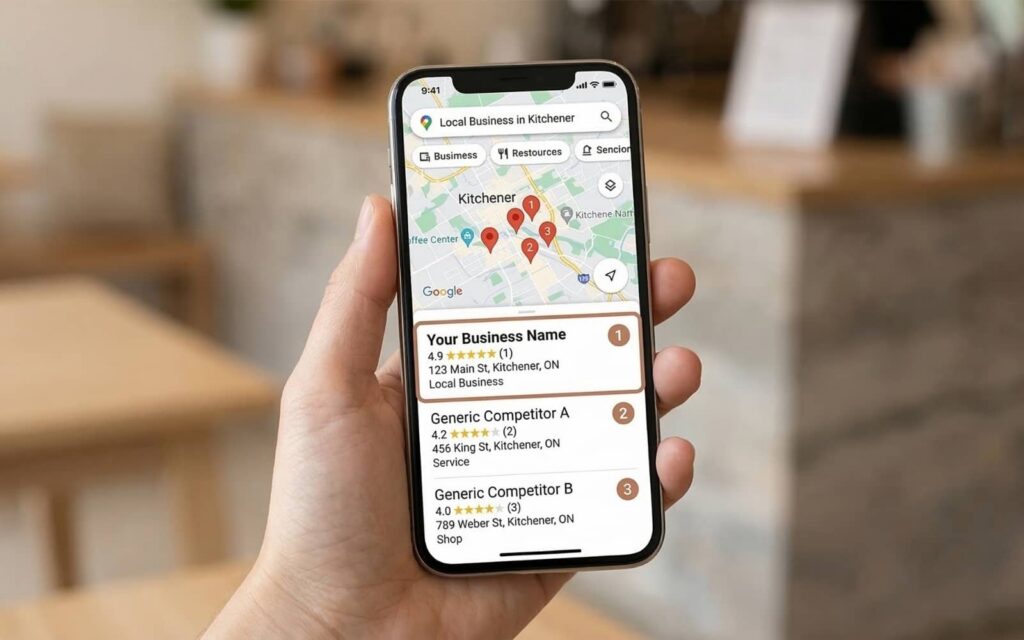
Here is how to optimize your Google Business Profile for the strongest possible local search impact.
Complete Every Single Field
Google rewards completeness. A fully completed profile with every field filled in accurately and thoroughly will consistently outperform an incomplete one. Your business name should match exactly how it appears on your website. Your category should be as specific as possible. Your description should naturally include your primary service, your location, and the type of client you serve.
Add Real Photos Regularly
Businesses with photos on their Google Business Profile receive significantly more clicks and direction requests than businesses without them. Add real photos of your work, your workspace, your team, and your results. Update them regularly because fresh content signals to Google that your profile is active and maintained.
Use the Posts Feature
Your Google Business Profile has a posts feature that lets you share updates, offers, and content directly on your profile. Most small businesses never use it, which means using it consistently gives you an immediate advantage over competitors in your area. A short post once or twice a week keeps your profile active and gives Google additional context about what your business offers.
Gather and Respond to Reviews Consistently
As mentioned in the local SEO section, reviews are a critical ranking signal. Within your GBP specifically, the recency of reviews matters as much as the quantity. A steady stream of new reviews over time signals an active, trusted business far more effectively than a burst of twenty reviews followed by months of silence.
Keep Your Information Accurate and Up to Date
Opening hours, phone numbers, and addresses that are out of date erode trust with both Google and potential clients. Every time something changes in your business, update your Google Business Profile the same day.
Common Small Business SEO Mistakes to Avoid
Even business owners who have started implementing small business SEO tips make these mistakes when they are starting.
Targeting Keywords that are Too Competitive
Trying to rank for broad high-volume keywords like “web designer” or “photographer” when you are a newer website competing against established businesses with years of domain authority behind them is a losing strategy. Start with specific long tail keywords and local keywords where the competition is manageable and build from there.
Keyword Stuffing
Repeating your keyword unnaturally throughout your content in an attempt to signal relevance to Google actually has the opposite effect. Google’s algorithm is sophisticated enough to recognize keyword stuffing and will penalize pages that do it. Write naturally for your human reader first and let keywords appear where they fit organically.
Ignoring Mobile Speed
We covered page speed as an on-page factor, but mobile speed deserves its own mention. Google uses mobile-first indexing, which means it evaluates your website primarily based on how it performs on a mobile device. A website that loads quickly on desktop but slowly on mobile is being evaluated on its mobile performance. Test your mobile speed regularly using Google’s free PageSpeed Insights tool.
Never Updating Existing Content.
Google favours fresh, current content. A blog post or service page that hasn’t been touched in two years sends a signal that your site may be outdated or neglected. Revisiting older content periodically, updating statistics, adding new information, and improving the writing keep your existing pages competitive in search rankings without requiring you to create something entirely new.
Not Tracking Results
SEO without measurement is guesswork. Google Search Console and Google Analytics are both free tools that show you exactly which keywords are bringing people to your site, which pages are performing well, and where your biggest opportunities for improvement are. Set them both up from day one and check them at least once every two weeks so your SEO decisions are always based on real data rather than assumptions.
Closing Thoughts on Small Business SEO Tips
SEO is not a one-time task. It is an ongoing practice that compounds over time, and the small businesses that benefit most from it are the ones that treat it as a consistent part of how they run their business rather than something they set up once and forget about.
The good news is that most of your competitors are not following even the most basic small business SEO tips. The bar for small business SEO is lower than most people assume, which means getting the fundamentals right puts you ahead of the majority of businesses in your local area without needing to do anything advanced or technical.
Here are three simple steps to start with today:
Step 1: Audit Your Page Titles
Go through every page on your website and check that each one has a unique, descriptive title tag that includes your primary service and location, where relevant. If any of them just say your business name or a generic word like “Home,” rewrite them today. This single change can improve your Google visibility faster than almost anything else on this list.
Step 2: Claim and Complete Your Google Business Profile
If you have not already claimed your Google Business Profile, do it today at business.google.com. If you have one but it is incomplete, spend thirty minutes filling in every field, adding real photos, and writing a thorough business description. This is the highest impact free action available to any small business trying to show up in local search.
Step 3: Connect Google Search Console
If your website is not already connected to Google Search Console, set it up today. It takes under ten minutes and immediately starts showing you how Google sees your site, which searches are bringing people to you, and any errors that might be holding your rankings back.
This post is your starting point for the entire Small Business SEO Tips series. Future posts will go deeper on each area covered here, exploring individual topics in more detail so you can build on what you have learned today and implement each piece with confidence. Every post in this series will link back here, so you always have a clear map of how everything connects and where to go next.


